

A lot of anglers think of Lousiana for it’s redfish. But, if you’re targeting speckled trout in the waters around New Orleans, your rig matters just as much as your location.
From the marshes of St. Bernard Parish to Lake Borgne and the outer edges of Lake Pontchartrain, Southeast Louisiana offers year-round trout fishing. But conditions change quickly here — tides move hard, water clarity shifts with the wind, and trout adjust their feeding behavior with the seasons.
The good news? A handful of proven speckled trout rigs will cover just about every situation you’ll encounter in our local marsh.
Why the Right Speckled Trout Rig Matters in Southeast Louisiana
Speckled trout are aggressive feeders, but they’re also highly tide-dependent and structure-oriented. Around New Orleans, they typically relate to:
- Oyster reefs
- Current seams
- Points and drains
- Grass edges
- Deeper channels in winter
Having the right rig allows you to:
- Control depth
- Adjust to current
- Match the hatch
- Present bait naturally
Whether you prefer live bait or artificials, understanding how and when to use each setup will make you far more consistent.
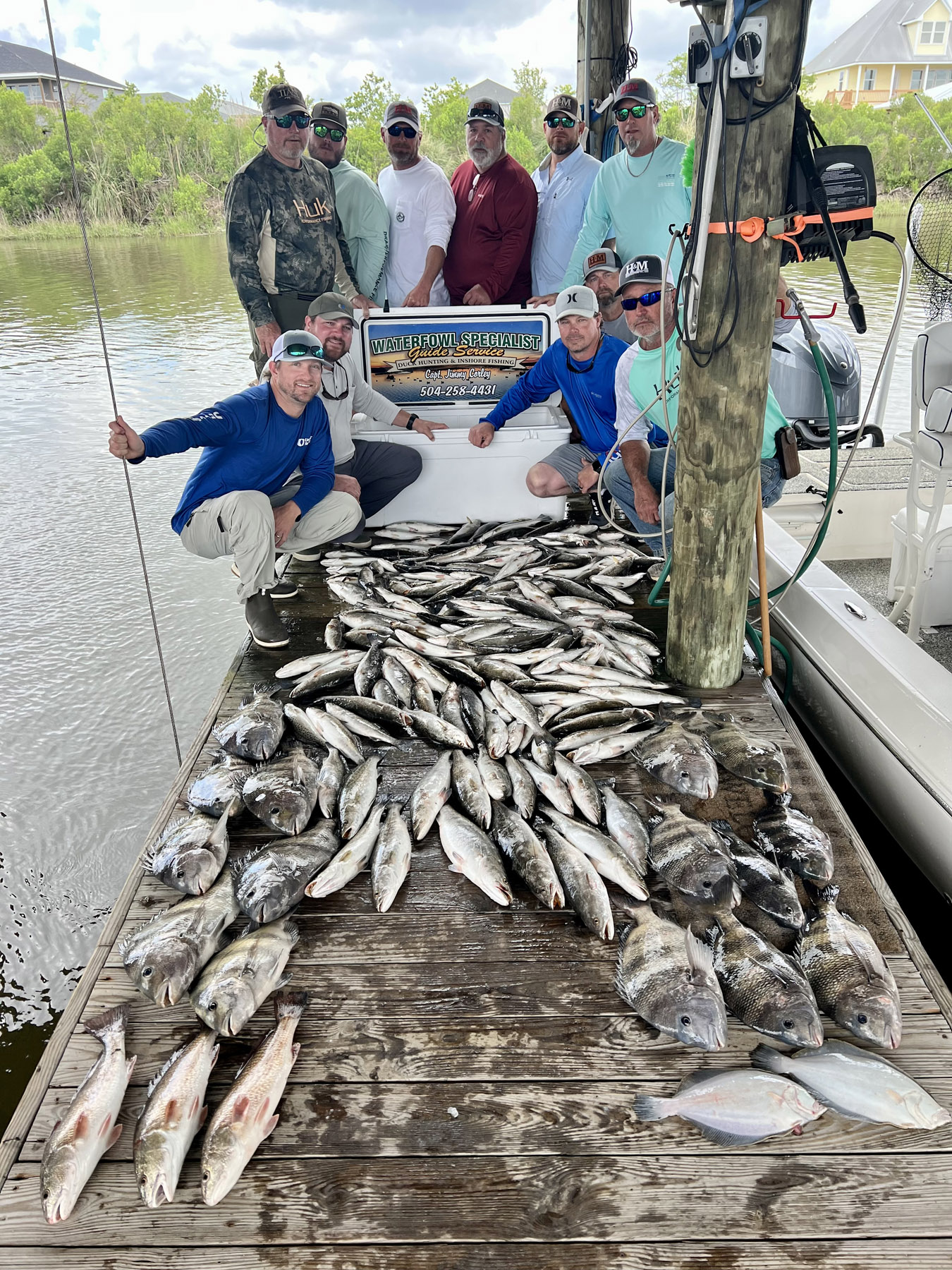
Live Bait Speckled Trout Rigs
Live bait shines in Louisiana’s marshes, especially when trout are pressured or conditions get tough.
1. Live Shrimp Under a Popping Cork
This is one of the most productive speckled trout rigs you can fish near New Orleans.
How to Rig It:
- 18–24 inches of 20 lb fluorocarbon leader
- Adjustable or fixed popping cork
- Size 1 kahle hook or 1/4 oz jig head
- Live shrimp hooked through the horn
When It Works Best:
- Spring and summer
- Stained water
- Windy days
- Trout feeding shallow (2–6 feet)
The popping cork mimics feeding fish. That “pop” draws attention in off-colored water common in the marshes outside New Orleans. After popping it once or twice, let the shrimp fall naturally — many strikes happen on the drop.
For beginners and seasoned anglers alike, this rig consistently produces.
2. Carolina Rig (Slip Sinker Rig)
When trout stack up deeper — especially in winter or during hot mid-summer days — a Carolina rig becomes extremely effective.
How to Rig It:
- Sliding egg sinker (1/2–1 oz depending on current)
- Bead
- Swivel
- 18–30 inch fluorocarbon leader
- Live shrimp or croaker
Best Situations:
- Deep holes
- Strong current
- Cold water months
- Fishing ledges and drop-offs
In the deeper channels around Lake Borgne and the MRGO rocks, this rig keeps your bait near bottom where larger trout often stage.
Artificial Speckled Trout Rigs
Artificial lures allow you to cover water quickly and dial in patterns. In fall especially, artificials can outproduce live bait when trout are feeding aggressively.
3. Jig Head with Soft Plastics
This is arguably the most versatile of all speckled trout rigs.
How to Rig It:
- 1/4 oz jig head (lighter in shallow water, heavier in deeper current)
- Paddle tail or shrimp-style plastic
- 15–20 lb braid with fluorocarbon leader
When to Use It:
- Fishing oyster reefs
- Targeting fall feeding frenzies
- Covering water efficiently
- Winter slow presentations
This rig gives you full control of the presentation. You can:
- Bounce it along shell
- Swim it mid-column
- Slow-roll it near bottom
In Southeast Louisiana, adjusting jig weight to match current strength is key. Too heavy and you lose natural movement. Too light and you lose bottom contact.
4. Soft Plastic Under a Popping Cork
This hybrid approach blends live bait presentation with artificial durability.
Why It Works:
- Adds sound attraction
- Allows longer casts
- Covers shallow flats effectively
- Great for windy days
When shrimp are scarce or you want to avoid constantly re-baiting, this setup can be extremely productive around grass edges and shallow bays near New Orleans.
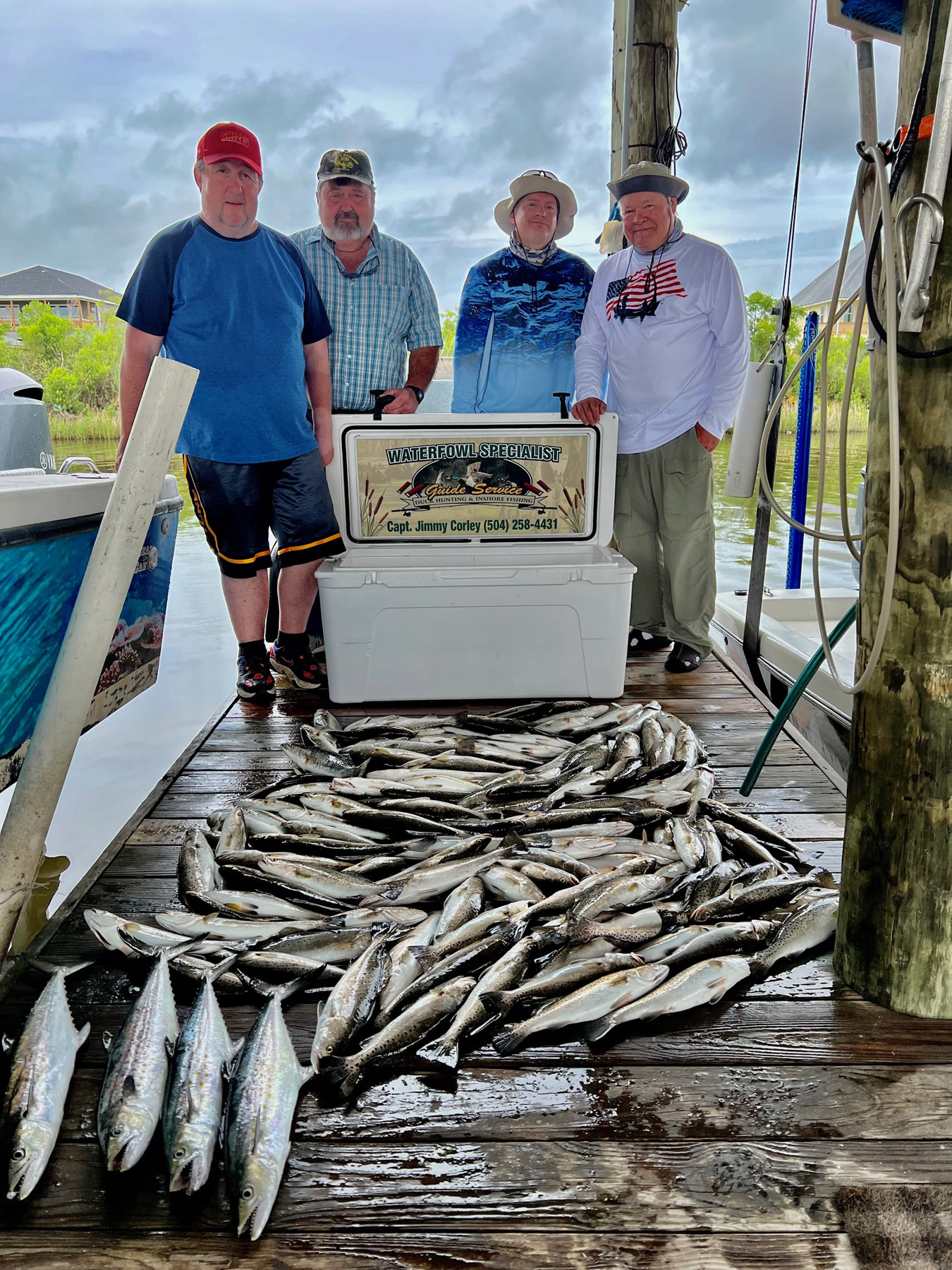
Seasonal Adjustments for Speckled Trout Rigs in New Orleans
One of the biggest advantages of fishing this region is that trout are available year-round. But the rig that works in May might not be the best choice in January.
Spring
- Live shrimp under cork
- Light jig heads in shallow water
- Fish moving onto reefs
Summer
- Early morning cork bite
- Deeper jig presentations mid-day
- Stronger tide focus
Fall (Prime Time)
- Aggressive trout
- Artificial lures shine
- Trout feed heavily before winter
Winter
- Slow down
- Fish deeper channels
- Heavier jig heads and Carolina rigs
Understanding seasonal movement around New Orleans’ marsh system helps you choose the right setup before you even make your first cast.
Common Mistakes with Speckled Trout Rigs
Even experienced anglers can overlook small details that matter:
- Leader too short under cork
- Using overly heavy jig heads in shallow water
- Ignoring tide direction
- Not adjusting to water clarity
- Fishing too fast in cold water
In Louisiana, tide movement is often more important than time of day. Pay attention to water movement first — then choose your rig accordingly. Final Thoughts on Speckled Trout Rigs
Final Thoughts on Speckled Trout Rigs
The best speckled trout rigs aren’t complicated — they’re adaptable.
Around New Orleans and St. Bernard Parish, conditions can change by the hour. The anglers who stay consistent are the ones willing to adjust depth, weight, and presentation based on tide, season, and structure.
If you’re planning a trip to fish the marshes just outside New Orleans, booking one of our New Orleans fishing charters gives you the opportunity to see how these speckled trout rigs are applied in real-time on local water.
And if you ever want to see how these setups are applied in real-time on local waters, spending a day on the water with someone who fishes these marshes year-round can shorten the learning curve considerably.
Either way — tie it on, watch the tide, and enjoy some of the finest speckled trout fishing Louisiana has to offer.
About the Captain
Captain Jimmy Corley is a Louisiana-born outdoorsman who’s spent years learning the marsh the hard way—by putting in the time when most folks are still drinking coffee. Based in Shell Beach, he guides hunters and anglers through the waters of St. Bernard Parish, focusing on safe, well-run trips and a simple goal: help you have a great day outdoors and head home with stories (and a cooler) worth talking about.